





Gene Spectra
Upload your raw DNA file and get clear, readable results. Nothing leaves your browser.
(opens in a new tab)People were pasting their DNA into chatbots.
I saw a post suggesting people upload their raw DNA files to an LLM to find out what's in them. It works, after a fashion. It also means handing your most personal data to a service you don't control.
Millions of people have a raw file from 23andMe or AncestryDNA sitting in a downloads folder. I wanted them to get the same kind of answers without that trade.
The Solution
154 markers, 20 categories, zero uploads.
Gene Spectra reads your raw file in the browser and checks it against a curated database of genetic markers covering nutrition, fitness, traits, sensitivities and more. It needs no account, and nothing is uploaded.
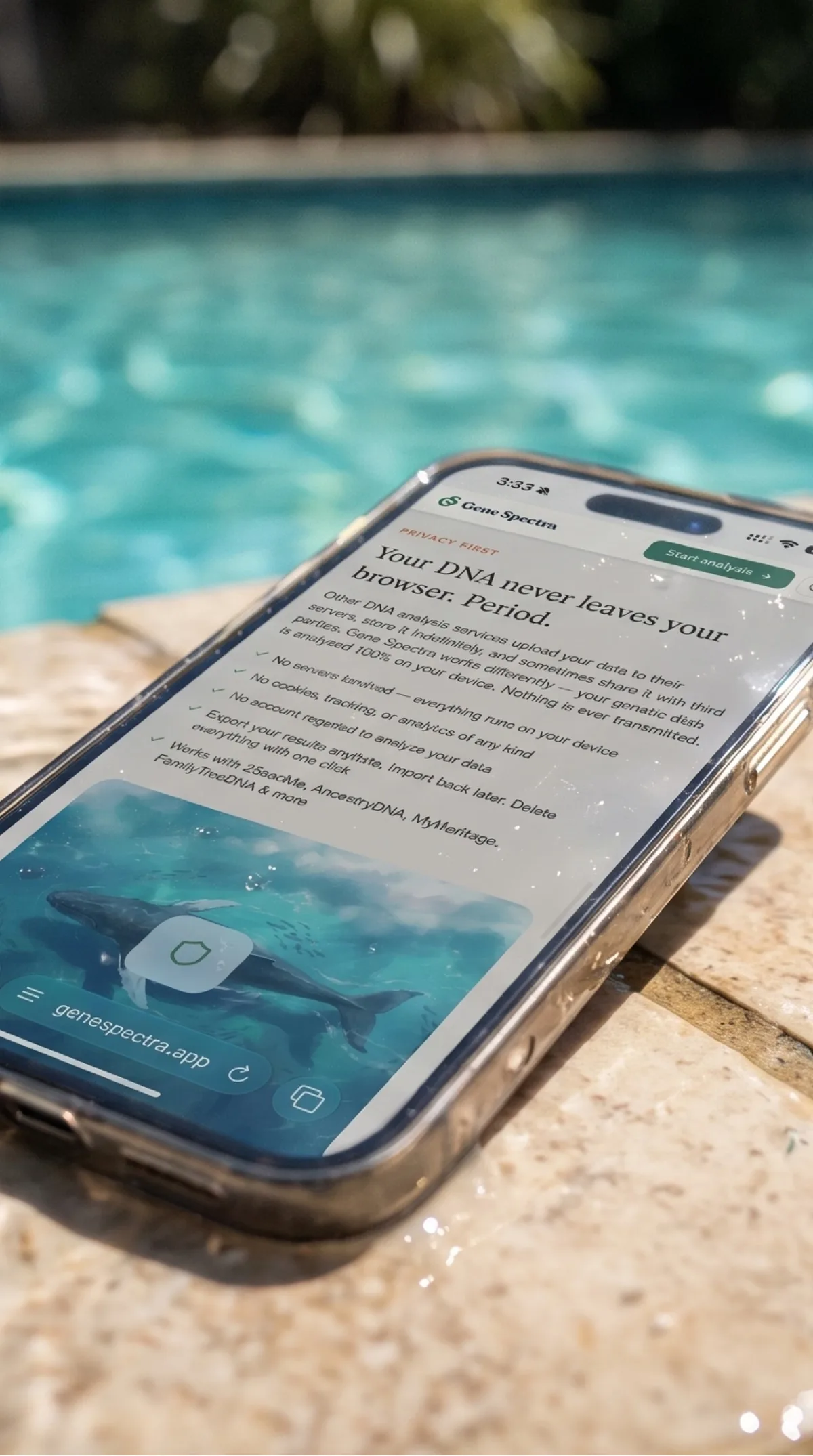
Runs entirely in your browser
Your file is parsed and analysed on your device. Nothing is uploaded, stored or sent anywhere. Close the tab and it's gone.
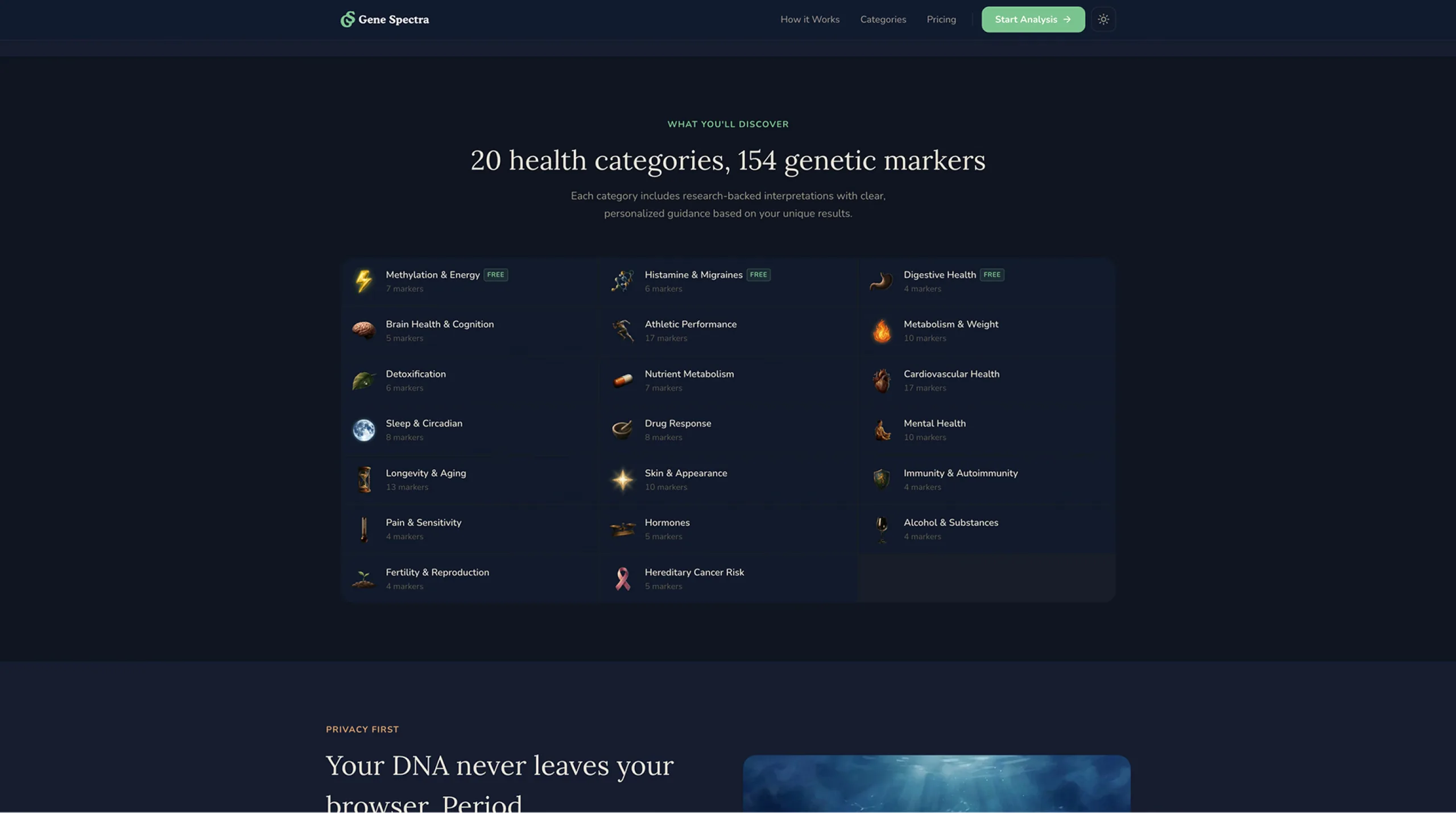
154 hand-audited markers
I checked every marker by hand, and compound rules reconcile markers that affect each other, so results don't rest on single-gene shortcuts.

Written to be read
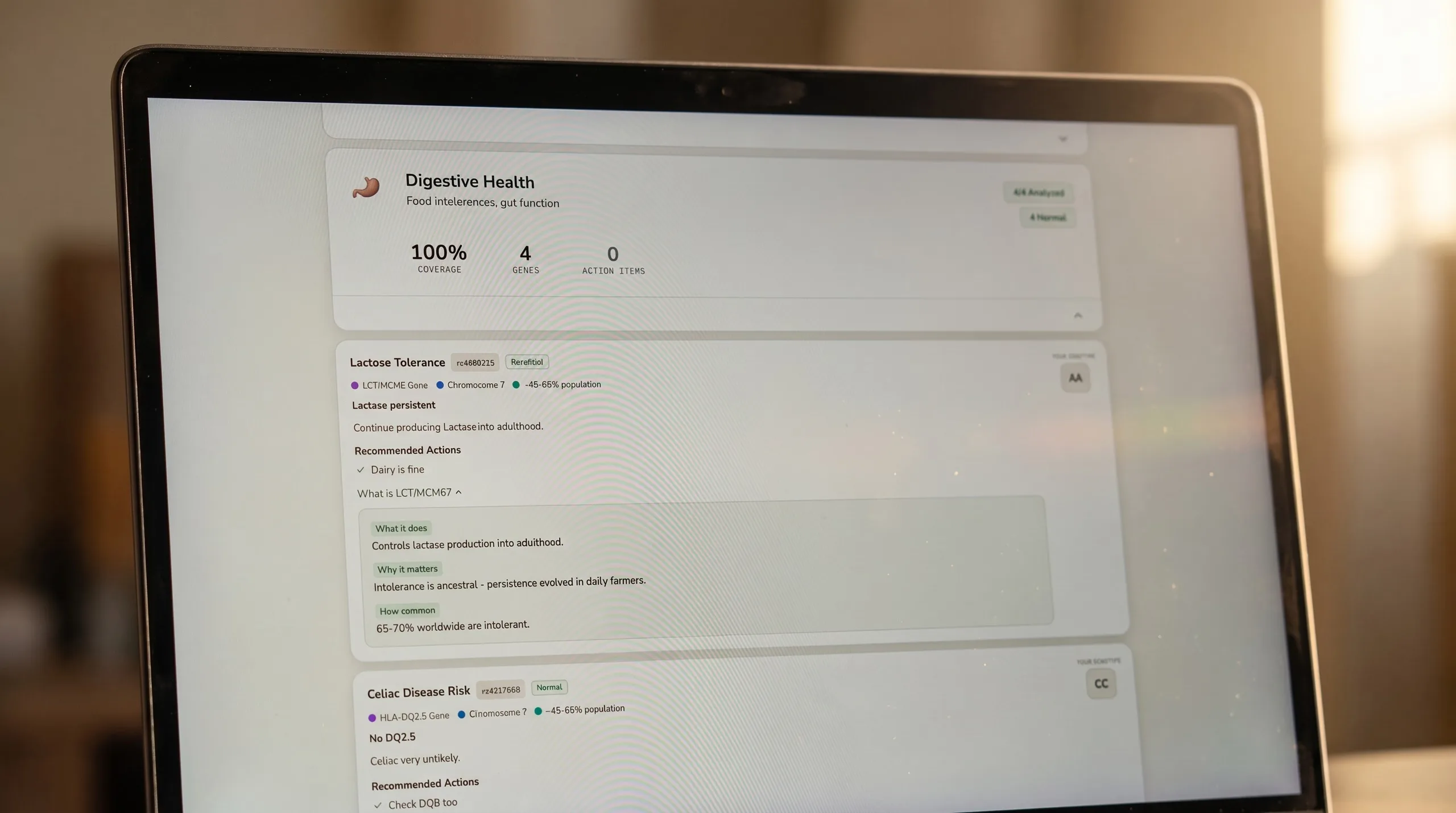
Each result explains what the marker means, how strong the science behind it is, and why it matters, in plain language.
My role
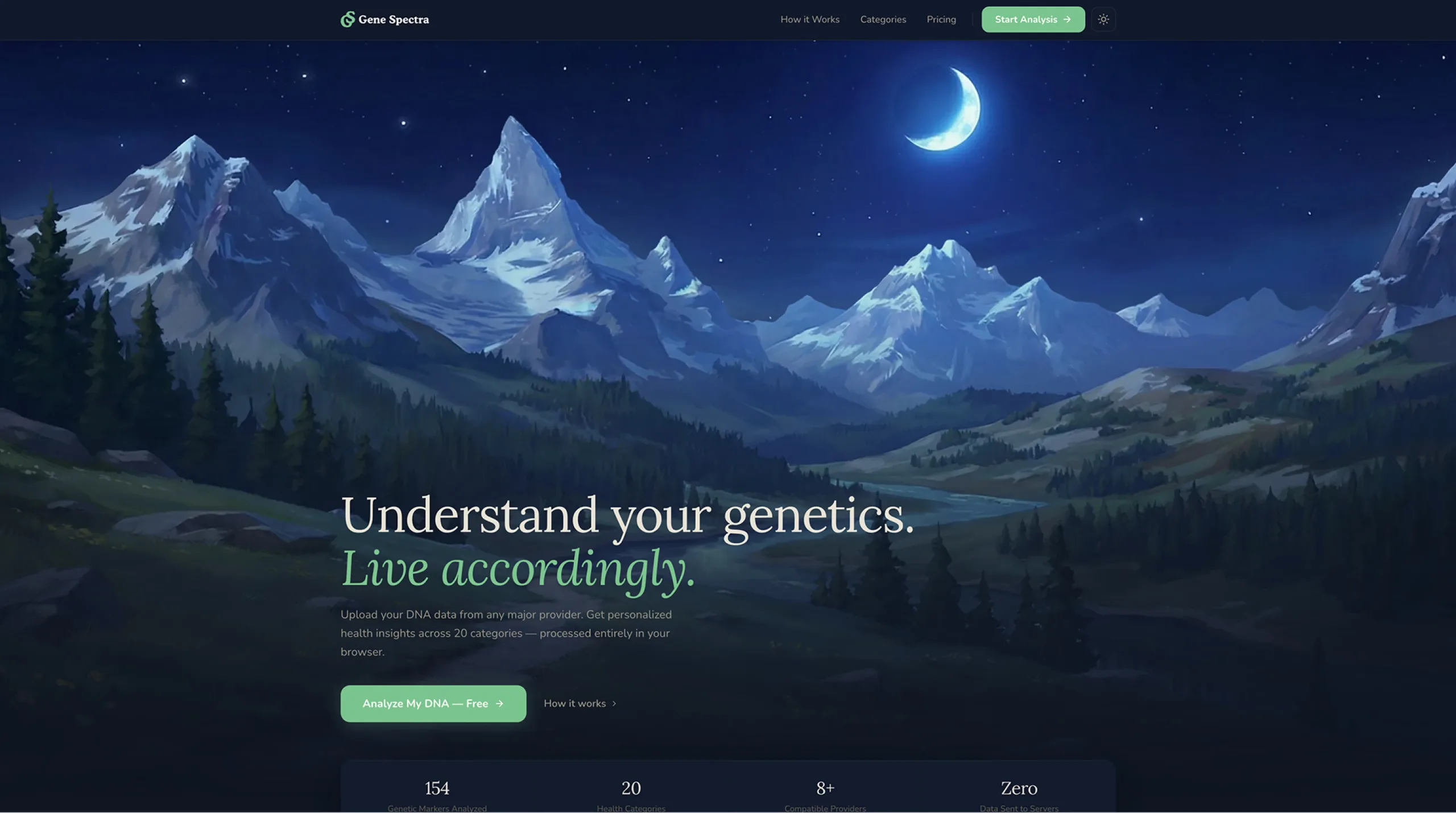
Solo, from concept to production. I designed the interface, built the analysis engine, and researched and audited the marker database. The hardest part was making dense genetics feel calm and readable without dumbing it down.
Decisions
Nothing leaves the device
Privacy was the reason to build it, so the analysis runs entirely client-side. The trade-off: everything has to run within what a browser can handle, with no server to fall back on.
Rules over a language model
Results come from a hand-audited marker database with explicit rules, so the same file always gives the same answer, and every result traces back to a marker I've checked. The trade-off: coverage only grows as fast as I can audit new markers.
Show how sure the science is
Every result states the strength of its evidence, so a well-studied marker and an early finding never look equally certain. The trade-off: results read less definitive, because the science often is.
Let's build something.
Launching a product, need a new site, or hiring? Tell me what you're working on.